
Get in While You Still Can
A letter to artists facing demoralization.

(This piece originally appeared in slightly altered form in the anthology: “You May Now Fail To Destroy Me: American Writers on Their Most Dangerous Beliefs.”)
Dear [REDACTED]—
Yes, I feel your despair. Everything you say feels familiar to me. Each day we’re told our art is doomed to obscurity in a torrent of slop, our process is obsolete, and all we have created has been stolen. And why? In order to train a technology which will disenfranchise, impoverish, and may exterminate us. What’s more, the very people who admit to this theft disparage our objections. “We had to in the name of progress,” and “Too late, genie’s out of the bottle, there’s no going back.” Both are routine refrains, not only from arrogant corporate marauders, but—heartbreakingly—friends and family who profess to value human creativity and admire artists. (Arguably, this is the more painful betrayal. We’ve repeatedly observed tech companies lie and cheat in order to serve themselves. We know how they spend lavishly on collaborators to ensure expedient collusion and the extinction of moral courage.) Now, in concert with technocrats and their sycophants, political tyrants have further undermined support for the arts. The aim here is to demoralize artists, to persuade us to abandon our work before we even begin. (Let’s hold off for now on why.)
The pressing issue is this: How do we defy demoralization and persist? What encouragement and solidarity can we offer other artists, established and aspiring?
Maybe this letter will help.
We’ve been coerced into thinking of our art as a product. Flattened by digital platforms, all art is reduced to “content” for “consumers.” Process has no value until it can be presented as product. Quality is determined by metrics of financial return, virality, propaganda objectives, or opaque internal politics. Never mind this idea of “art as entertainment” is a relatively modern perspective. History aligns art with transcendent experience—rituals, new ways of perceiving, immortal memory, divine connection, and our response to the enigma of our existence. Entertainment—to say nothing of fleeting fame or corporate profit—has hardly been the preoccupation of artists throughout history. Only lately have we been brainwashed to hold such a narrow view of what we create.
You know creating art has inherent value. You know this because you’ve engaged with your process for hours on end. This isn’t to say it’s easy. Projects come with frustration, doubt, and failure. Battered as you are by the “product mindset,” you may find yourself compelled to continue, almost against your will. Despair makes quitting alluring. But the fantasy of quitting is just that—a fantasy—because you know that your life without the problem of art is far, far worse. I know when I have tried to take a break, I have suffered. There is no exoneration.
I have a mental game I play when the specter of quitting haunts me. I imagine that I am on my death bed, and despite spending thousands of hours making art, I’ve received none of the hallmarks of traditional success. It never paid my bills. I was obscure in my field, even among my peers. My work found no significant audience, and I enjoyed zero institutional support or recognition. No wealth, no fame, no prestige. I’ll go so far as to imagine the work has no legacy beyond my death, and will never be discovered in the future. Game over. The total wave of me is preparing to be subsumed into the ocean of oblivion. Would I regret spending thousands of hours making art? Would you?
With each passing year, this mental game edges closer and closer to becoming my reality. I create with a diminishing sense of any “return.” And when I play this game, I come to the same conclusion: I would never consider the hours wasted. I still see abundant rewards within this beautiful failure, how it makes life more valuable. My only regret would be quitting.
So why is power set on dismantling the lives of artists? How is a “creative product” which ostensibly has no “real value” worth stealing en masse while simultaneously gutting the systems and institutions which support us? Why pour billions into energy-hogging AI to displace human art with slop content? Why demote the artist to the act of prompting versus creating?
I don’t believe it’s human art they have issue with. It’s that making original art gives us an inconvenient amount of freedom from their desire to monopolize our attention (and therefore our thoughts). Art doesn’t have to be engaged socially or politically to work against a totalitarian vision. The act of making art itself partially disables their agenda. It withholds imaginative space from them, and within this space we may develop the means to destabilize their power.
People like to say it’s in our DNA to express ourselves, that we are “born storytellers.” Look at French caves painted 20,000 years ago! Read the poetry scrawled in Nazi death camps! How comforting! Our artistic humanity has always found a way. But I’m skeptical of this assertion. Yes, we may be predisposed as a species to make art, but there’s nothing to say the trait can’t be extinguished. As humans, we adapt as best we can to our environment, but the scale of environmental change at hand—both ecologically and technologically—provides no inherent protections for our creative drive. An artist is an artist by virtue of making art, not simply calling themselves an artist. And when it comes to our nature, I believe the law of “use it or lose it” is very much in play.
Art is decision making. A core tenet of the technocratic belief system is hyper-optimization. Doing more, faster, with less. The most pervasive myth of optimization is it’s all upside with no pain. Costs are theoretically recouped by the savings realized from optimization. The developing crop of AI tools to “make art” removes the hard work of human decisions at the micro level in favor of lightly directing the macro. “Write me a poem about MMA fighting in the style of Chaucer,” and the bot shits the slop. It’s so easy, it’s a lark. If you can dream it, it will do it for you. The adoption of AI assistants in business and academics has conquered the dreaded blank page. But in outsourcing the decision making writing (and all art) requires, AI tools invite the degeneration of crucial mental processes we’ve taken for granted. (Think it’s crazy you don’t have a single phone number memorized anymore? Just wait.) Only when we become thoroughly dependent on these systems—and experience an interruption in access or, say, unaffordable new subscription fees—will we realize how damaged we’ve become. AI tools like ChatGPT and their siblings aren’t augmenting our abilities—they are neurotoxins.
Artistic decisions are complex aesthetic, emotional, and logistical problems. Because of this, making art gives your subconscious a great deal to feed upon. The subconscious will work on your problems. It will unlock your creativity. The conscious mind can only chew on so much, while your subconscious mind is insatiable, and feasts on whatever is most readily available. If you aren’t providing it with your own artistic questions—other realities to explore and ponder—it will turn towards the most polluted and readily available source— political, economic, and infotainment trash, algorithmically force-fed via tech media platforms.
This is another reason why an artistic practice is more essential than ever. To abandon your art is to leave your subconscious mind undefended. A mind fed on a steady diet of their shit tends towards unchecked anxiety and depression, all the while endowing the anxious, depressed person with an erroneous sense of being ”meaningfully engaged” politically and socially. I think this is summed up nicely to when someone is described as being extremely online. An artist who has held out against social media addiction can always tell when someone is extremely online. The extremely online exist not as actors in their life, but reactors. They are always hungry for the next hit of outrage or diversion. They readily respond to misinformation in their feed. They lack the capacity to question authenticity or seek context. The extremely online will eventually cede their creative mind to AI operators and their slop. They will sell out imaginative possibility for passive surreality. All who abandon their capacity for creative decisions and discernment will end up completely insane within this insane system.
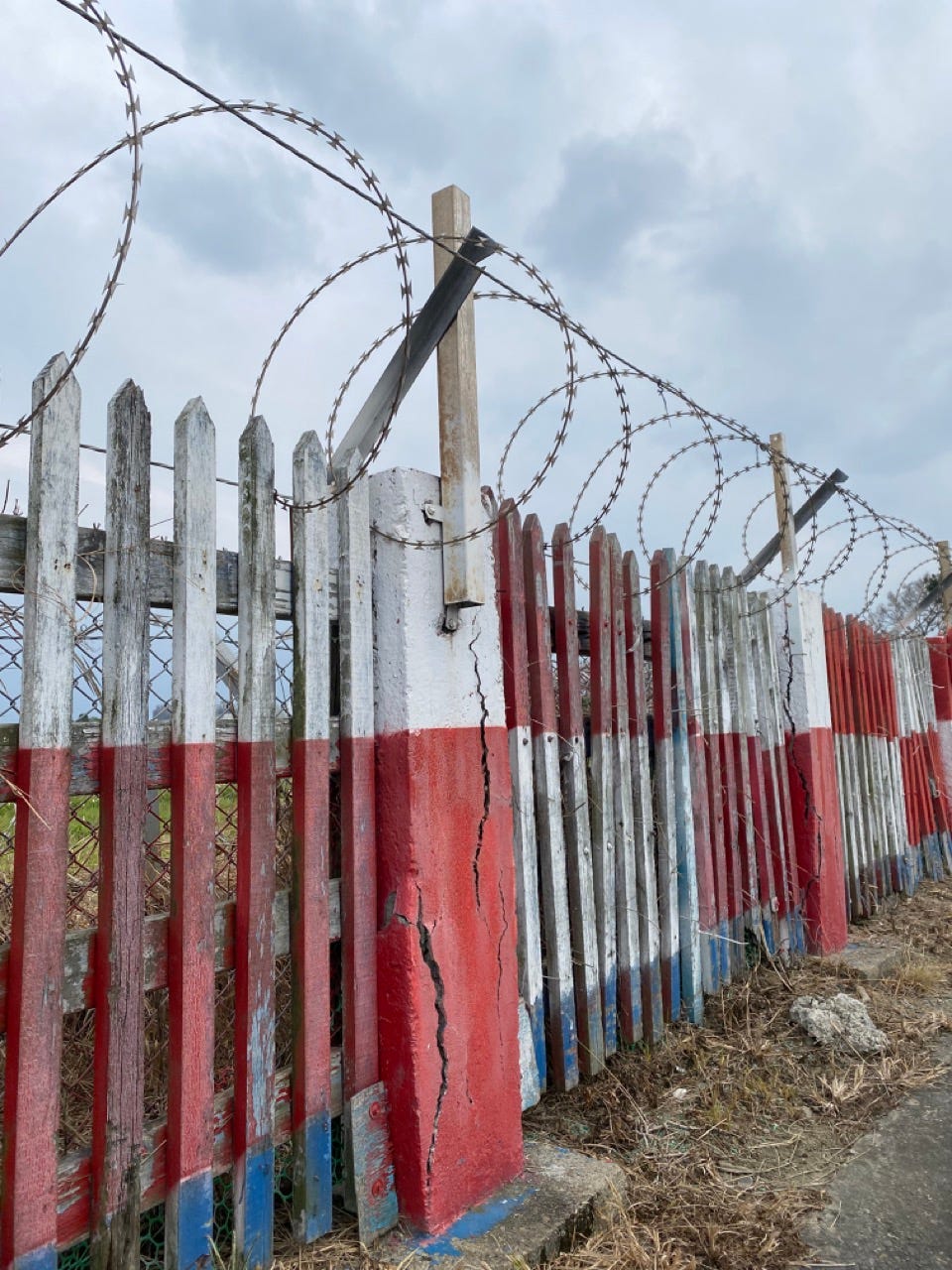
The 20th century’s concentration camps imprisoned millions for the purpose of forced labor until extermination. The 21st century equivalent is the distraction camp. Tech titans have hijacked the humanist computing renaissance with their ubiquitous devices, addiction engineering, and fetishistic adoration of a dehumanized eternity. This is some hardcore dysfunction. How do you end up like that? They’re so humiliated by merely being alive, and yet cannot fathom a world in which they don’t exist forever. What a bind, to be so scared. “Life is like, so awkward, but I’m hella terrified of death, bro.”
To create, artists need time. Time free from grinding need, time to turn inward. Reclaiming time from the distraction camps is not only hard, it’s an entire industry. The future patrons of the arts will not be the institutional curators, wealthy benefactors, fickle medialords, or the waning pyramid scheme of academic prestige merchants. Perversely, our benefactors may turn out to be the disillusioned servants of the ruling class—the deprecated software engineer, the decommissioned trans military member, the nothing-to-lose gun collector whose Medicaid benefits receded, or the futureless teen who knows every climate pledge under the sun vaporizes. This is our gestating army, the counterforce offspring bred from arrogant, totalitarian rawdogging. Bereft of purpose and meaning in their lives, spiritually bankrupt from hollow entertainment, the former believers may well grow to become the sidewalk executioners of tech billionaires and political tyrants. In doing so, they may liberate our time.
The thing about the new American dictator class is how their power is closely tied to their rapacious craving for attention. Ours are no chess players of the old Soviet vintage, outfitted with nested dolls of paranoia. Ours are no cabal of fossil fuel oligarchs with strangling financial footholds in foreign banking and real estate systems. Our pathetic bootstrap crop comes from the tawdry American strain of hucksters and sideshows, of bullshit-and-chaos, of nepo babies without the chops or attention span to go the distance. They are second rate imitators, mercenary jesters, and improv demagogues.
Endurance over hope. Despair but persist. Hold this close. Feed and fortify your subconscious. Call out the frauds. Let’s continue to make human art, and in doing so, inspire more human artists. Embrace our concentration camp over their distraction camp. Do not court the old patrons any more than is required to sustain yourself. Bide your time. Encourage our new patrons to arise. Art remains a way of life, not a way to make a living.
Get in while you still can.
Oro en Paz, Fierro en Guerra from San Francisco—
-ERR
Dude. As the cars say, "just what I needed."
When the rando who finds mi cuerpo next to a bunch of bottles of redolent and the one line a day journal I've been inputting all my truths into casually tosses it into the 65 gallon trash bag, I'll be smiling from the other side. Hell, I'll be laughing.
Endurance over hope for sure.
As you say, "My only regret would be quitting."